In the Artangel Collection
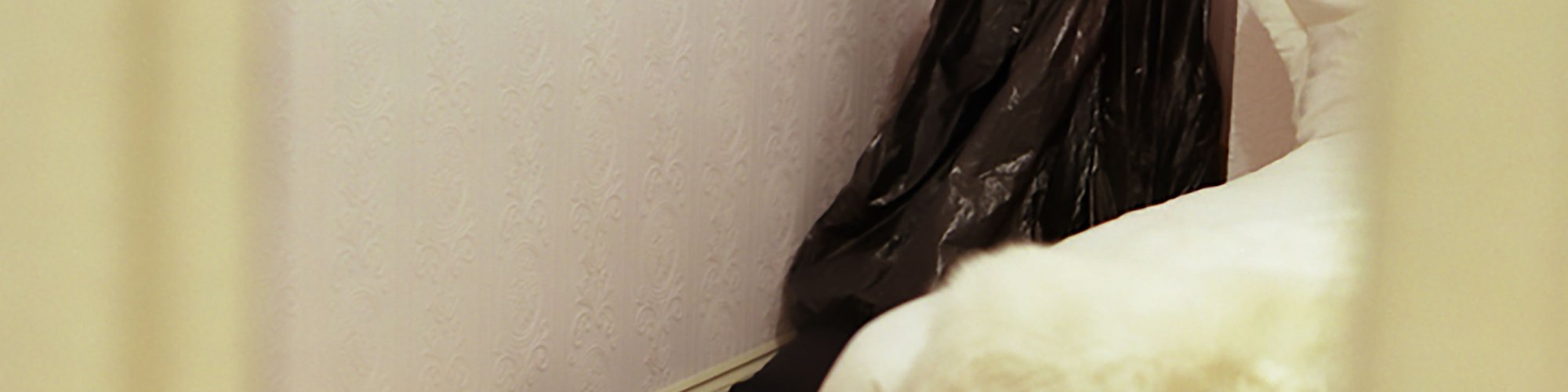
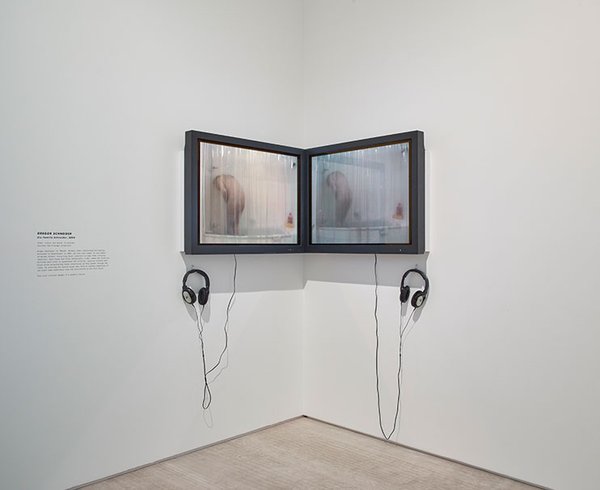
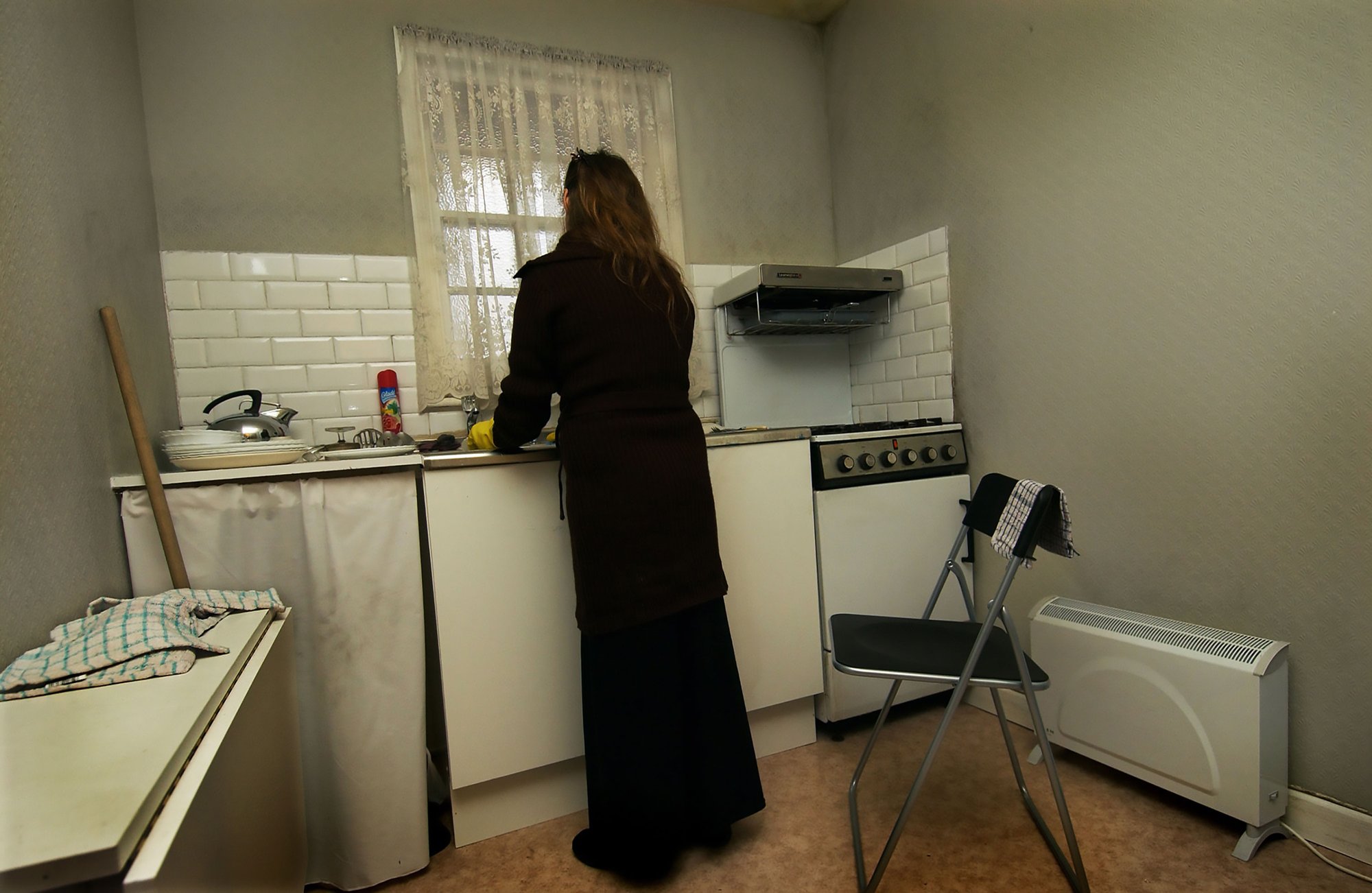
Die Familie Schneider consists of two films of the claustrophobic installation realised in two neighbouring houses — 14 and 16 Walden Street. Documented by the artist with a handheld camera, these two films are presented side by side, replicating the disorienting, mirrored experience of the installation. The 'double' film can be accompanied by a display of 176 framed black and white photographs from inside the house.
Find out how to borrow Die Familie Schneider
If you are interested in presenting this work, fill out the form to get access to technical specifications, use cases, and more to see if the work is suitable for your project.
The Living Rooms
Andrew O'Hagan
There was a tenement flat in the Glasgow of my youth that seemed haunted to me. I’m speaking of a time before I knew how it is people not buildings which become haunted, and walking down West Princes Street three times a week I would stop at a certain corner and look up to find the yellow window at 15 Queens Terrace. I suppose I must have been nervous in those days, uncertain, to an uncertain degree, whether I’d ever cope in the adult world, but the light in the tenement flat made me frightened of ghosts. It made me realise that absence was just another presence.
On 21 December 1908, beyond the yellow window, an elderly spinster called Marion Gilchrist was murdered in her dining room and a brooch was stolen. In what was understood by Conan Doyle and others to be a case of rank anti-Semitism, a down-at-heel Jew called Oscar Slater was arrested and later convicted of the murder on circumstantial evidence. Some claimed to have seen a man ‘like’ Slater running from the house in a hurry at the time of the murder. In fact, people more often described seeing another man, and those who testified against Slater later admitted they were pressured to give the evidence they gave. Slater was also condemned for seeming guilty and for having a pawn ticket for a brooch about his person, though the item represented by Slater’s ticket was lodged at a date before the crime was committed. Slater appeared to have some sort of doppelganger, so did his conscience, so did his belongings. The case was fascinating, but I have to say it was the house that summoned the mysteries for me: we like to think that bricks have memories, that windows are eyes or the retinas of eyes, and the flat in Queens Terrace came to seem to me like a repository of hidden truths about human nature. It was a museum of the uncanny.
By Appointment: Doors and Curtains at 14 and 16 Walden Street
James Lingwood
Walden Street in Whitechapel in London's East End is an unprepossessing row of 19th century terraced houses. Initially built for traders and artisans working close to the arteries of Commercial Street and Whitechapel High Street which pumped people and goods into the City of London, many of these streets were condemned as slums in the 1960s and 1970s and knocked down. Somehow, this enclave around Walden Street survived relatively intact. Although close to London's Square Mile, it has never been a wealthy part of town.
Die Familie Schneider was open by appointment only. Visitors - always two for each appointment - collected the front door keys for the two houses from a small office a few minutes' walk away in the same street. From the outside, 14 and 16 Walden Street looked the same, down to the white net curtains in the ground floor windows.
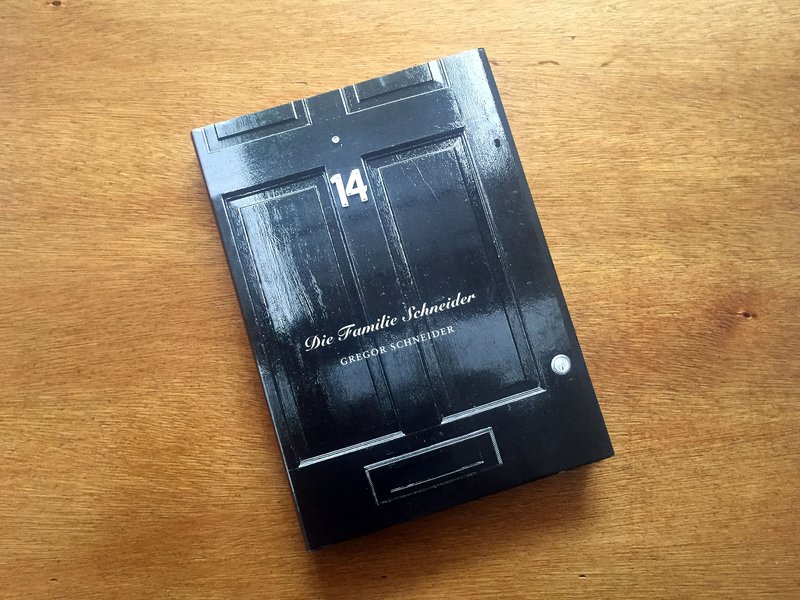
Gregor Schneider: Die Familie Schneider, book
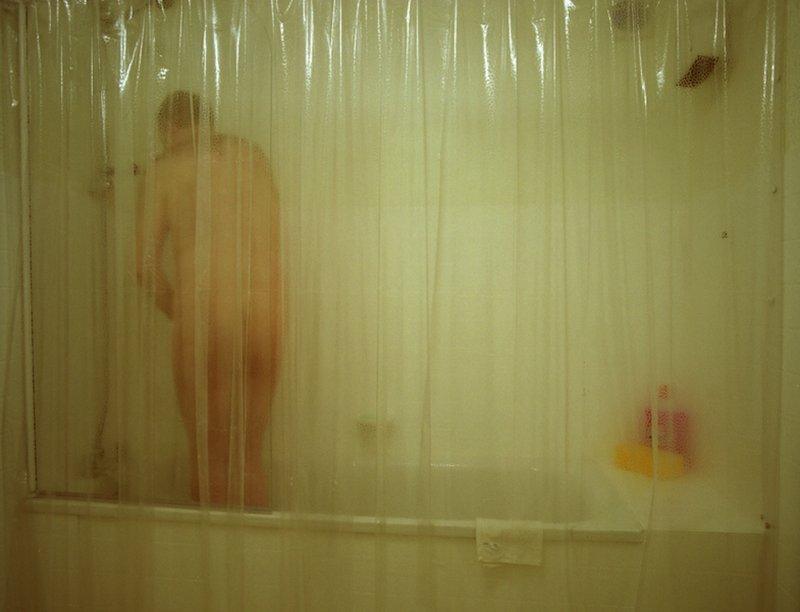
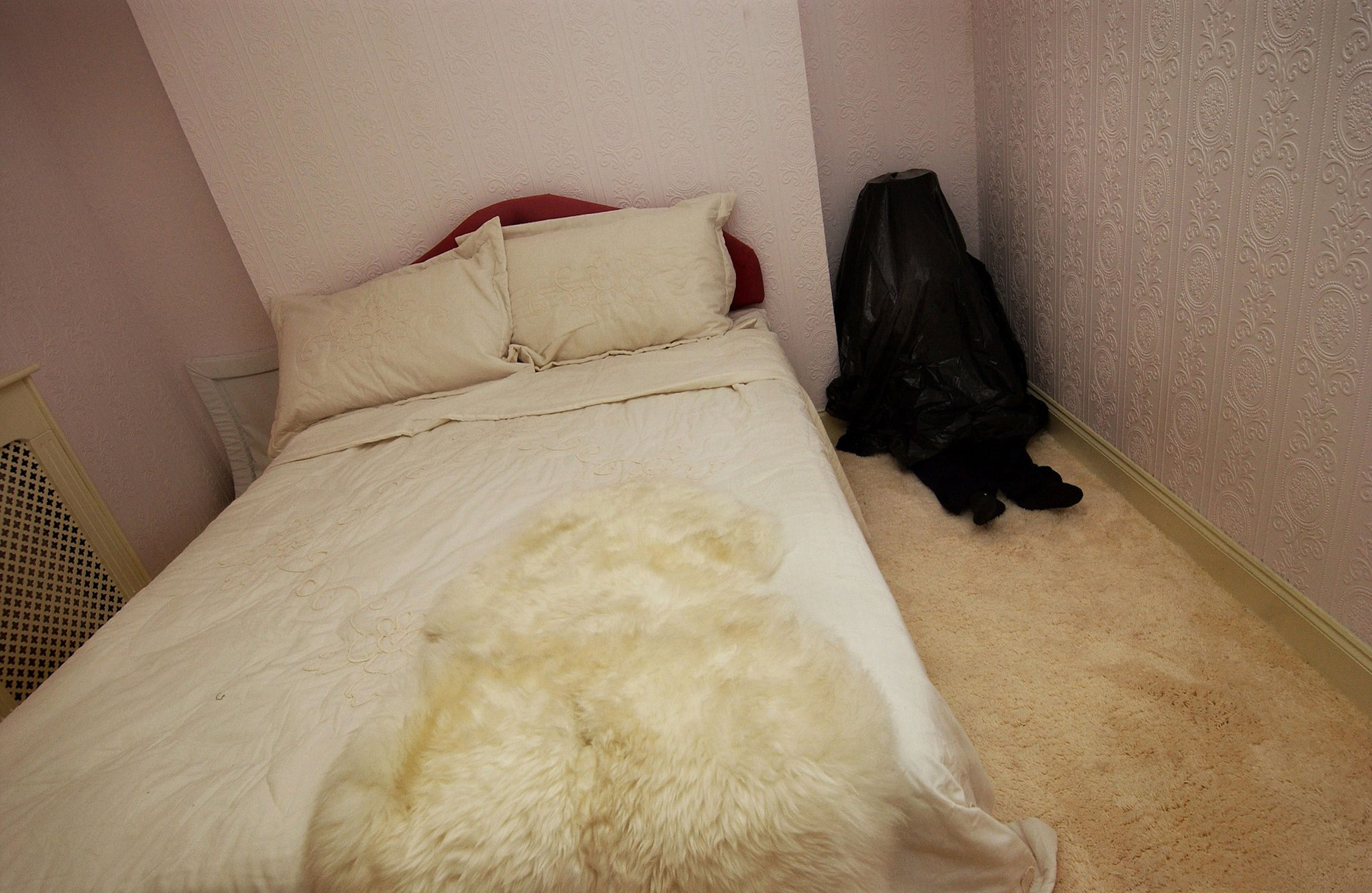
In two unremarkable houses in London's East End, Gregor Schneider constructed a remarkable new work, Die Familie Schneider. 14 and 16 Walden Street were identical in every way. They had the same rooms and furnishings with the same cracks and stains, inhabited by the same families doing the same, unseemly things.
Amongst the visitors who made their way through the intensely claustrophobic interiors were the writers Andrew O'Hagan and Colm Tóibín. In the publication Gregor Schneider: Die Familie Schneider, their writings, presented alongside an extended series of Schneider’s photographs, attest to the disturbing experience of these dark double houses.
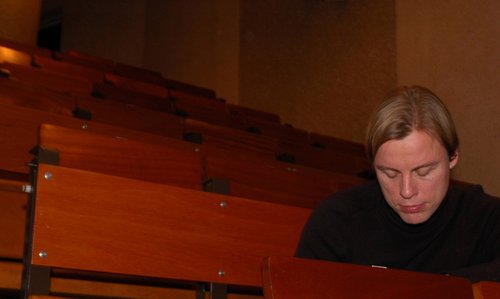
Gregor Schneider
Gregor Schneider is renowned for his unnerving presentation of normality, in which his chosen medium – the domestic room – becomes the site of an unrelenting existential confrontation.
Schneider’s compelling and ongoing project is Haus Ur, the ever-changing construction and reproduction of the interior of his childhood home in Rheydt, Germany. Reconstructed in the German Pavilion at the 2001 Venice Biennale as Dead House Ur, this work earned Schneider the Golden Lion for sculpture. Die Familie Schneider, the artist’s first major ‘house’ work outside Germany, was commissioned by Artangel and presented in London in the Autumn of 2004.
Schneider has referenced spaces that are well beyond the domestic sphere: including a religious centre (the Caaba in Mecca) a red-light district (Steindamm, Hamburg) and the maximum-security internment facility on Cuba (Camp V, Guantanamo Bay).
When is the last time you thought twice about letting a door swing shut behind you as you entered a room? Or realised, with a shudder, that you were not alone in a house? – Richard Dorment, The Telegraph, 6 October 2004
And when Schneider has succeeded in frightening the life out of you at number 14, you go next door to number 16. Now the essentially rational fear (of physical danger, of the unknown) you felt in the first house is transformed into a different kind of fear. For in the second house you find yourself in the realms of the uncanny, moving like a ghost revisiting the scene of its own murder, moving silently from room to room, experiencing a sickening sense of déjà vu. – Richard Dorment, The Telegraph, 6 October 2004
Ignoring me, the woman at the kitchen sink is taking an interminable time over a grubby plate. Perhaps we’ve had a row. I might as well be invisible. More likely I am dead, but don’t know it yet, like Bruce Willis in The Sixth Sense. Maybe I got run over or mugged and fatally stabbed on my way round here from the nearby Artangel office where I had picked up the keys, but have yet to catch up with the fact. – Adrian Searle, The Guardian, 5 October 2004
The presence of the houses was so powerful that ever since, from time to time, I have briefly imagined myself back in their claustrophobic space. Sometimes it will be a sweet, rotten smell of the kind that impregnated the gloomy rooms that acts as a trigger. Or I have come across others who made appointments to see the houses, all of whom want to share their survivors’ stories: Did you make it down into the cellar? Or: Did you see the pornography? Or: Did you hear a baby crying? There have not been many installations that so successfully isolate the viewer with his or her own fears. – Tim Adams, The Observer, 2 January 2005
Credits
Commissioned by Artangel in association with Kunststiftung NRW, with the support of The Stanley Thomas Johnson Foundation, The Henry Moore Foundation, IFA, Moose Foundation for The Arts, the Goethe-Institute and the Arts Council England. Die Familie Schneider is included in The Artangel Collection, a national initiative to commission and present new film and video work, supported by the National Lottery through Arts Council England and the Esmée Fairbairn Foundation.
Artangel is generously supported by the private patronage of The Artangel International Circle, Special Angels, Guardian Angels and The Company of Angels.