
Project presentations
Toledo, Spain
For specific enquiries about visiting Tres Aguas please e-mail the tourist office.
Town Hall Square (Plaza del Ayuntamiento)
Plaza del Ayuntamiento
45002 Toledo
Spain
Opening times
This is an open square with free access at all times.
Torre des Aguas and Convento Santa Clara are both open at weekends.
The sequence of water flow runs daily: 09:00 – 21:00
(Except Mondays and Fridays 09:00 – 10:30 when it is stopped for cleaning and maintenance.)
Water remains covering the surface 21:00 – 00:00
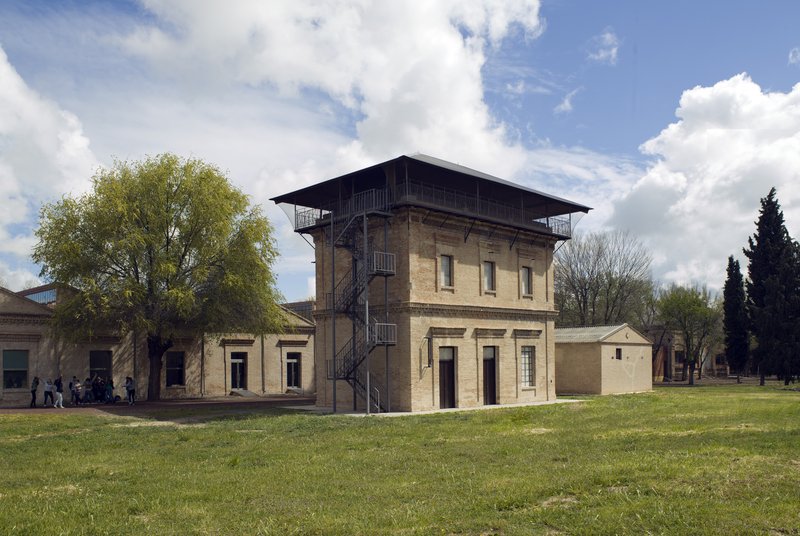
The Water Tower (Torre del Agua)
The Water Tower stands next to the River Tagus about half an hour's walk along the bank of the river from the centre of the city.
Constructed in the Mudejar style, it is located on the edge of an extensive group of buildings, the Real Fábrica de Armas de Toledo (Royal Arms Factory) which was once one of the most important weapons factories in Spain, and is now the campus for the University of Castilla-La Mancha in Toledo. The tower was built to store water for use in tempering metalwork for swords and armour. It stood derelict for many years until it was restored for Tres Aguas, and now houses a vertiginous sculptural work offering a sequence of dramatic viewing experiences.
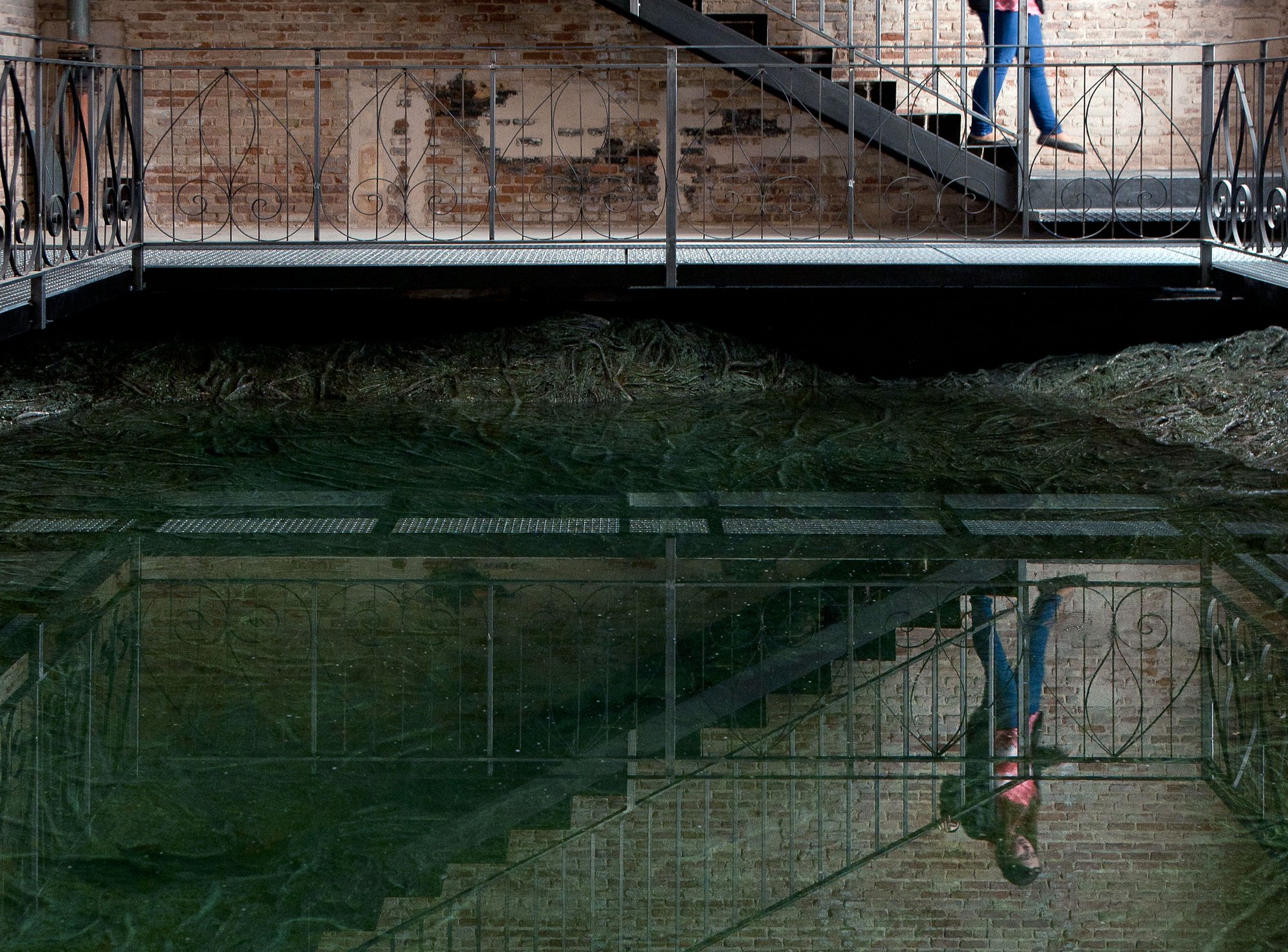
Visitors ascend an iron staircase on the exterior of the building to the roof from where they can enjoy exceptional views of the city and the river. They then descend a second staircase, drawn towards a large dark pool inside. Water flows over the sculpted forms, sometimes turbulently and sometimes more calmly, and then gradually drains away.
When the pool is full, it is a calm mirror in which architecture and onlooker are reflected: when empty, cast metal forms resembling a chaotic decomposing vegetal mass are revealed.
The cycle of movement inside the Torre del Agua lasts for 17 minutes.
Image: Tres Aguas at The Water Tower (Torre del Agua), Toledo, Spain (2014). Photograph: Luis Asín
The Convent of Saint Clara (Convento Santa Clara)
The Convent of Saint Clara is one of the historic convents in one of the quieter parts of the city, far removed from the noise and bustle of visitors.
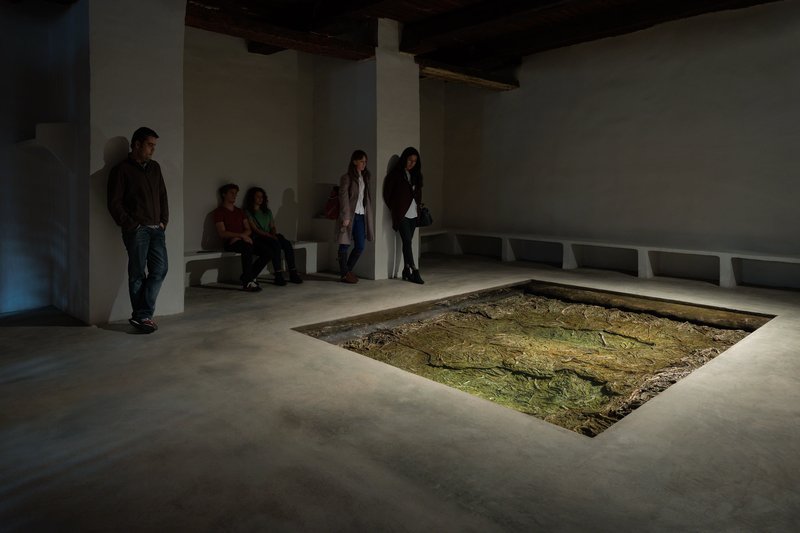
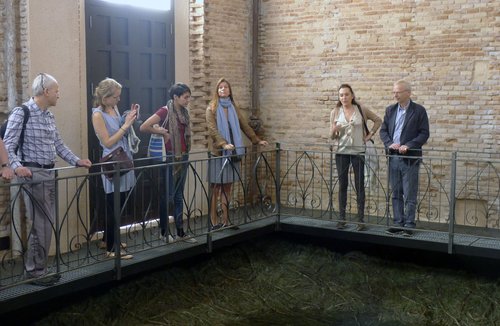
The convent was until recently home to a closed order, the Clarissimas (Holy Clares). The nuns agreed that a small part of the convent, accessible through its own door from the street, could become a place for Iglesias’s work. Beyond a configuration of screens which enclose the space and accentuate the feeling of interiority, a rectangular basin has been cut into the floor; a deep pool with glistening metal surfaces is revealed.
The movement of the water is calm and it draws the viewer deep inside. If the town hall square offers a place for more animated exchange, Iglesias’s work within the convent is a site for private reflection, a conversation with oneself.
The cycle of water in the convent runs for around 15 minutes.
Town Hall Square (Plaza del Ayuntamiento)
The town hall square is one of Toledo’s main public spaces, a meeting place for citizens and a destination for visitors the city. The square is flanked by the huge Gothic cathedral built between the thirteenth and fifteenth centuries on the site of the Moorish Great Mosque, the Archbishops palace and the Ayuntamiento, the Town Hall.
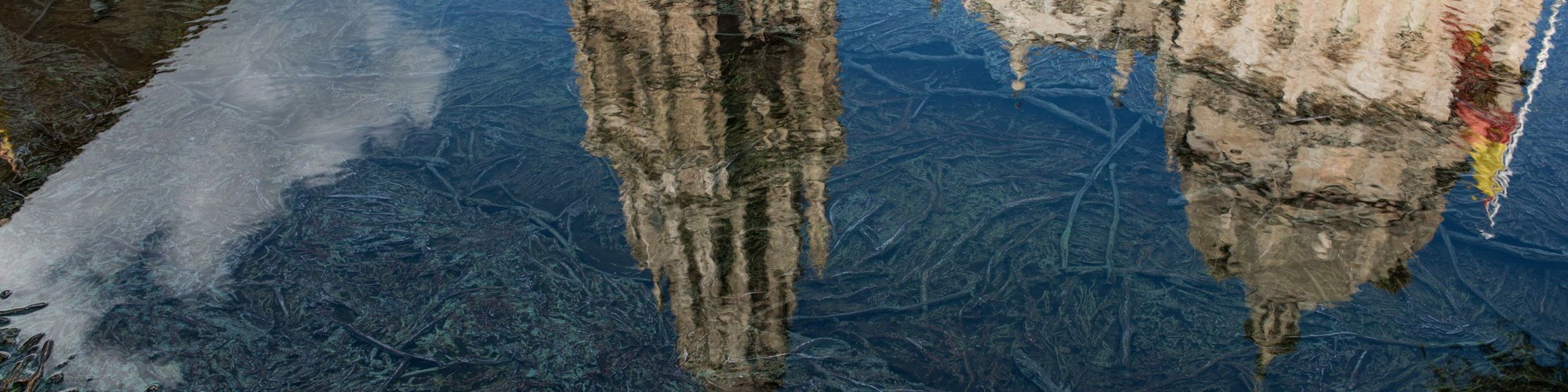
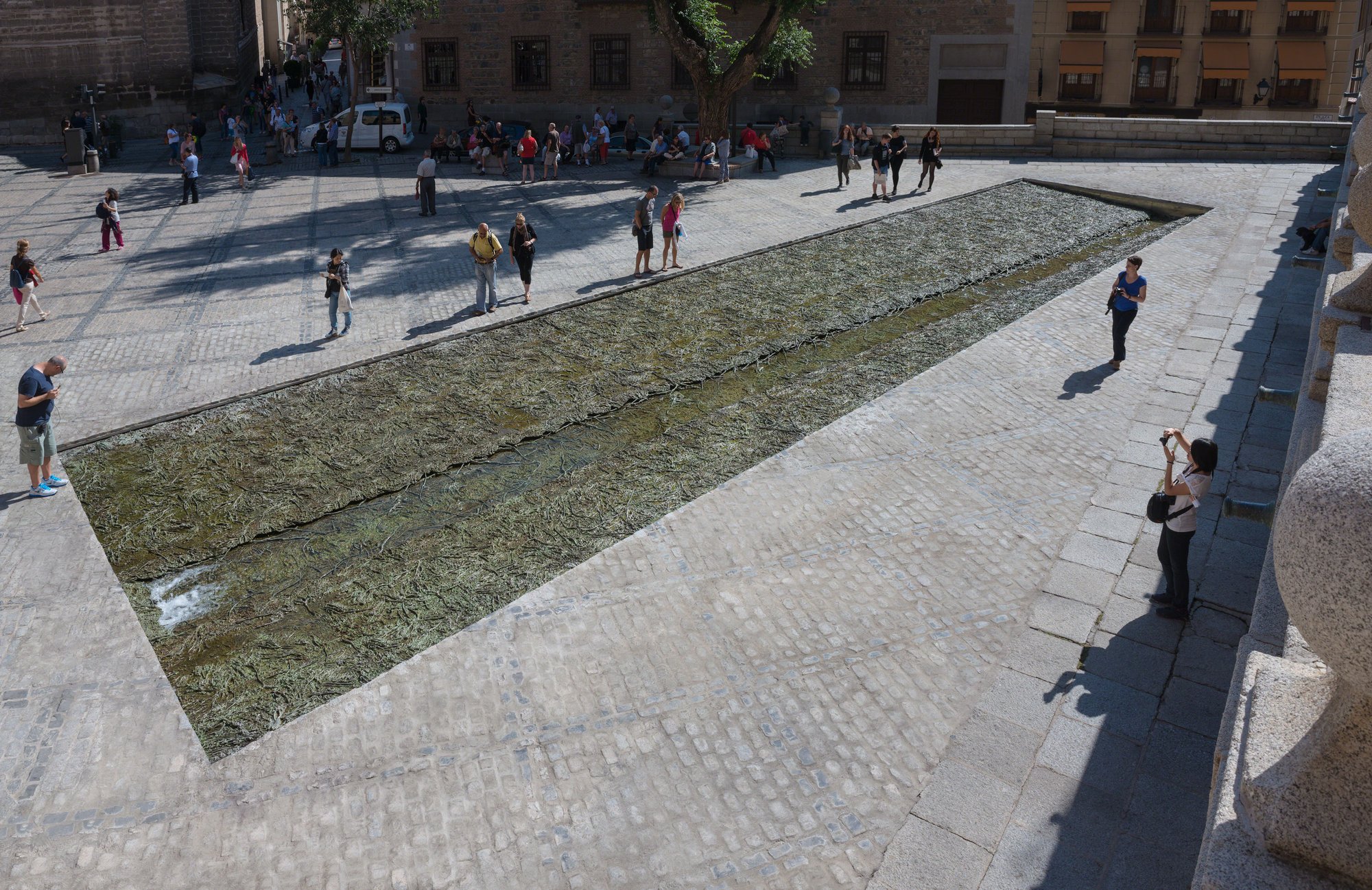
In the lower part of the square in front of the town hall, Iglesias made a dramatic cut into the surface of the square. It seems as if an ancient aquifer or subterranean channel has been uncovered beneath the stones. Water courses over the cast metal forms of a huge bas-relief, some twenty-five meters in length, and then gradually ebbs away. When full and still, the basin becomes a mirror which reflects and destabilises the normally imposing architecture.
When empty, the dark green forms of the sculpture catch the light. At the same time, the entangled mass suggests a darkness beneath the surface of the city. At the heart of the city, Iglesias has created a place for people to meet, look and reflect.
The cycle of water runs for around 30 minutes.
Image: Tres Aguas (2014) at the town hall square (Plaza del Ayuntamiento), Toledo, Spain. Photograph: Attilio Maranzano (2015)
Writing on Tres Aguas
Cristina Iglesias’s sculptures fathom the depths of time in an analogous way, by drawing up from the earth its treasure and its vitality and picturing the process in action in the debris at the bottom of her pools. She allows us to glimpse the deep past of emergence and creation, the stuff of origin. – Marina Warner
Essays originally published in the book Cristina Iglesias – Tres Aguas.
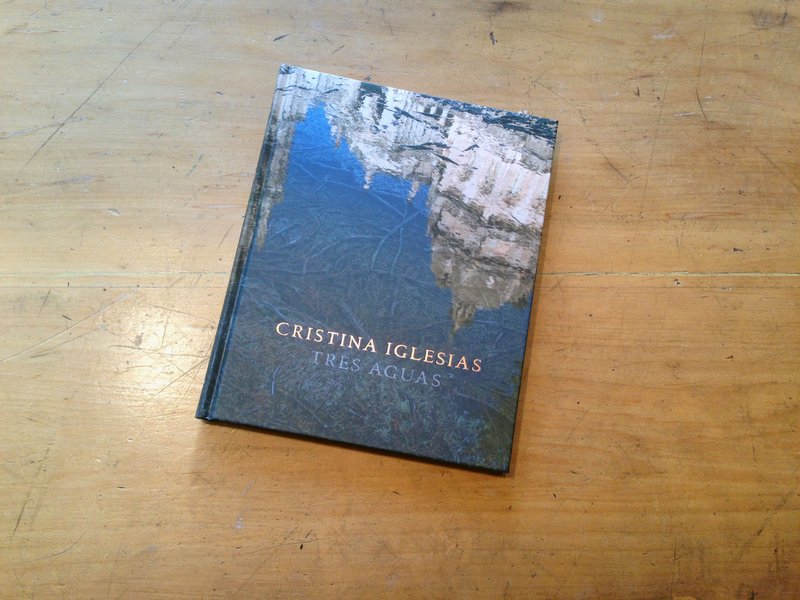
Cristina Iglesias – Tres Aguas
This book includes an extensive sequence of colour photographs and important essays by renowned cultural historians Beatriz Colomina and Marina Warner, together with an introduction by Artangel Co-Director James Lingwood reflecting on how Iglesias’s sculpture interacts with the rich history of Toledo and the vital importance of water to the flourishing of the city and the life of the mind.
- Co-published by Artangel and Turner
- Series: Arte y Fotografía
- Binding: Hardbound
- Format: 20 x 25
- Pages: 148
- ISBN: 978-84-16354-75-7 (English edition)
- ISBN: 978-84-16354-74-0 (Spanish edition)
Cristina Iglesias
Born in San Sebastian in 1956, Cristina Iglesias lives and works in Madrid.
She represented Spain at both the 1986 and 1993 Venice Biennales and has had solo exhibitions of her work hosted by Kunsthalle Berne (1991); Stedelijk Van Abbemuseum, Eindhoven (1993); Guggenheim Bilbao (1997); Museu Serralves, Portugal (2002); Whitechapel Gallery, London (2003); the Ludwig Museum, Cologne (2006); and Museo Reina Sofia, Madrid (2013).
Iglesias has made several notable large scale works in civic spaces, including Deep Fountain in front of the Royal Museum of Fine Arts in Antwerp and the bronze doors for the extension of the Prado Museum in Madrid.
She excavated the tower’s floor and built a cistern made of stainless steel, shaped like a pond filled with tree roots, and activated by a water pump that creates a whirlpool effect as the water drains in and out. – Raphael Minder, The International New York Times
She excavated the tower’s floor and built a cistern made of stainless steel, shaped like a pond filled with tree roots, and activated by a water pump that creates a whirlpool effect as the water drains in and out. – Raphael Minder, The International New York Times, 23 April 2014
Cristina Iglesias designed a water bed for the interior of this small building that once flooded, allows the viewer to plunge into contemplation. – (in Spanish) Adolfo de Mingo Lorente, La Tribuna, 24 August 2014 (English translation by Google)
Credits
Commissioned by Artangel and El Greco 2014. Sponsored by Acciona and Liberbank. Commissioned with the support of Artangel International Circle and the Tres Aguas Patrons Group. Presented in association with the Ayuntamiento de Toledo and the University of Castilla – La Mancha.
Artangel is generously supported by the private patronage of The Artangel International Circle,Special Angels and The Company of Angels.