In The Artangel Collection
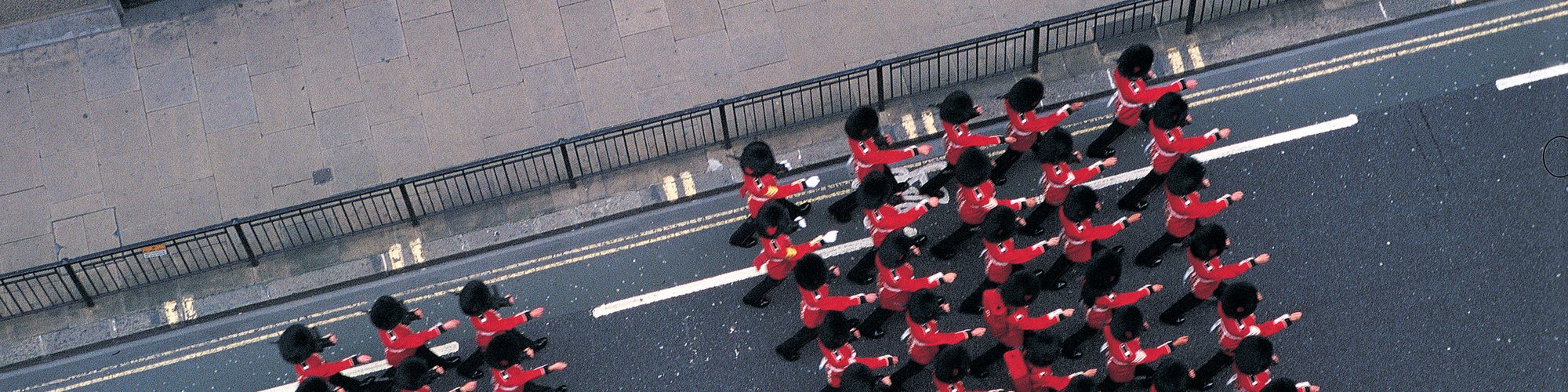
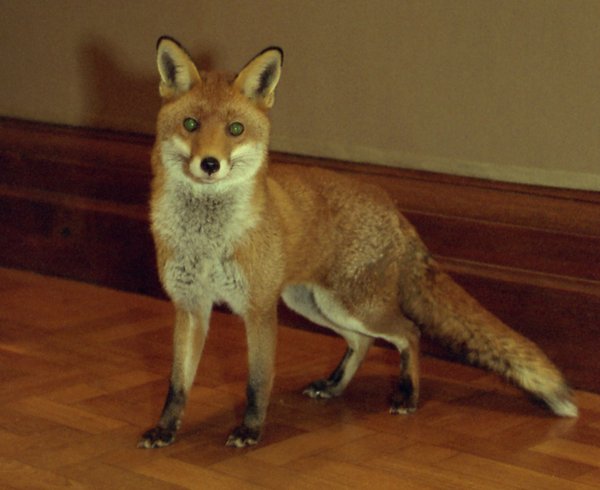
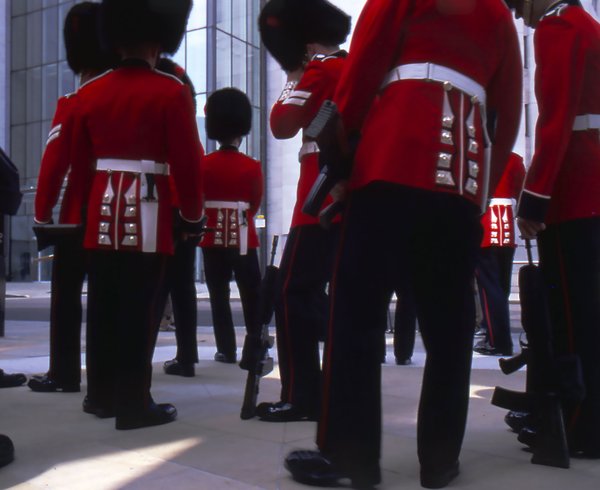
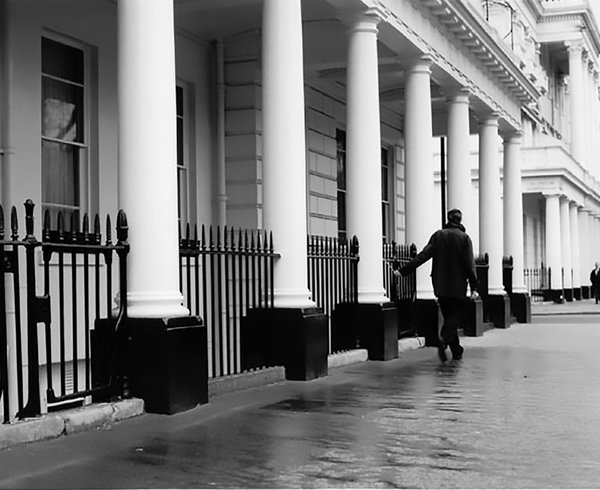
From Alys’ Seven Walks project there are three moving image works available to loan: Nightwatch, Guards and Railings. Each of these films presents his walked mapping of London’s habits and rituals from unique perspectives. The wall-based works from Seven Walks (painting, photographs, drawings, maps, and notes) are in the Tate Collection.
Register your interest
Fill out the form to find out more about how you can borrow and present this work, including tech specs, use cases, and more.
Incompleteness, by Richard Harbison
As a student I always started writing essays so late at night there wasn't much hope of finishing them properly. They began in a leisurely way but became more telescoped as they went on until they read like sketches with connective tissue left out. And they didn't end, but came to an edge, which they simply fell off.
Rumours: James Lingwood in conversation with Francis Alÿs
What is interesting about spreading a rumour?
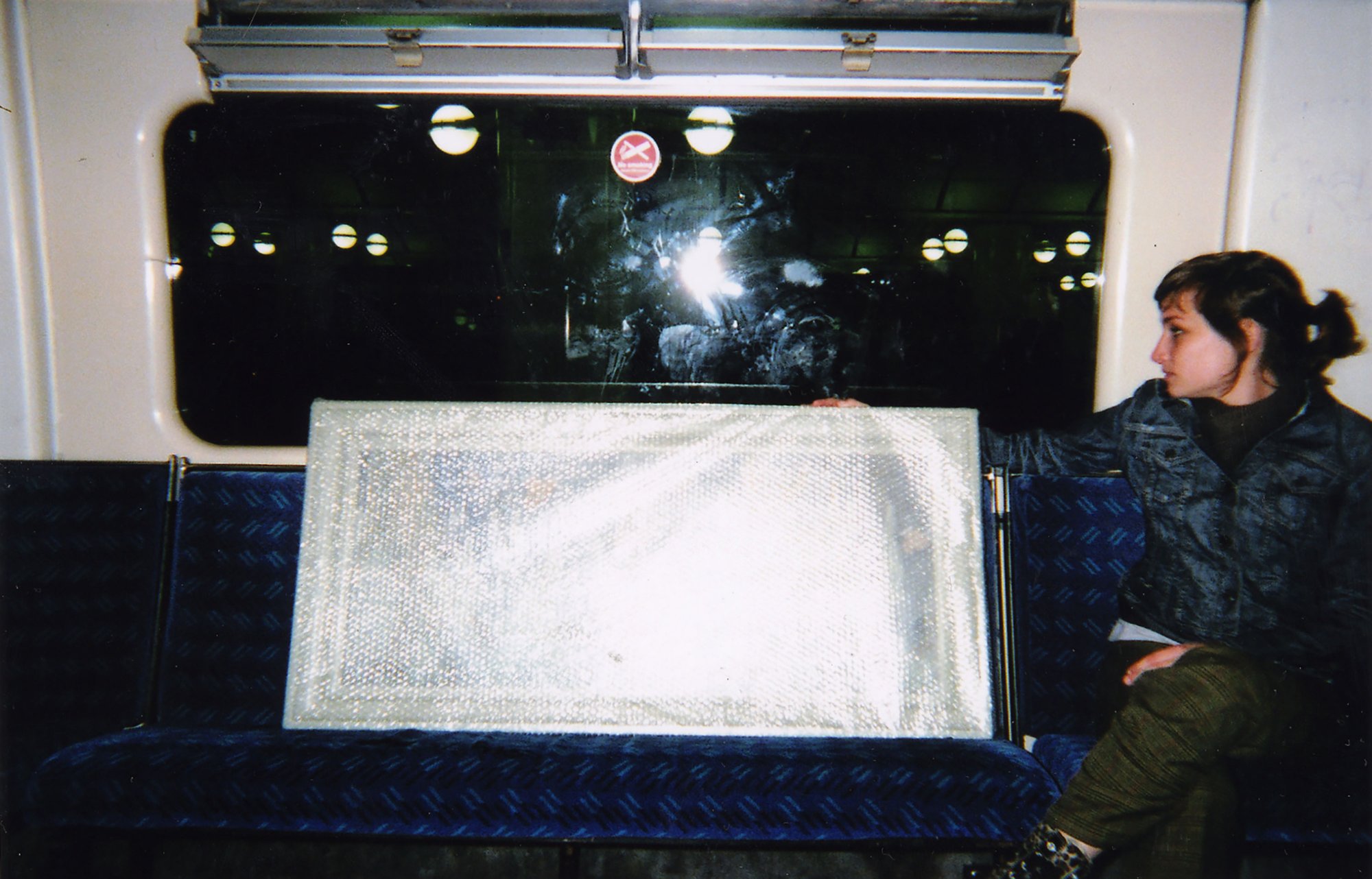
From a purely pragmatic point of view, it was very tempting to take the opportunity of being invited by an organisation like Artangel to use and abuse its logistical skills. Artangel could have been the perfect agent of propagation, with all its reservoir of contacts in the city. But the rumour was also corresponding to my mental image of London – foggy, diffuse, dispersed….this fragmented organism seemed particularly propitious for a rumour to circulate within. […]
Do you like rumours because they are analogous to the way you’d like your work to function?
I like to set an idea in motion, to set the parameters for a situation to develop, and then lose control of it. The whole project has functioned like a kind of rumour, the way one piece led to another, like a chain of people. In a very discursive way, the pieces were echoing one another, they were like clues for each other. […]
You feel the medieval within the modern in London?
London has never cared enough to rethink its urbanism in the way that other great cities did in the aftermath of great fires or other disasters. Because it’s such an engine of business and trade, London rebuilt itself even when the city was still smoking. Business as usual. That was one of the first things you saw after the bombs, which went off in London this week – shops and restaurants with signs saying business as usual.
Read the rest of this conversation
Image: (left) Research material, Francis Alÿs, Seven Walks (2005)
Making Seven Walks: A Meeting with Orlando Gough
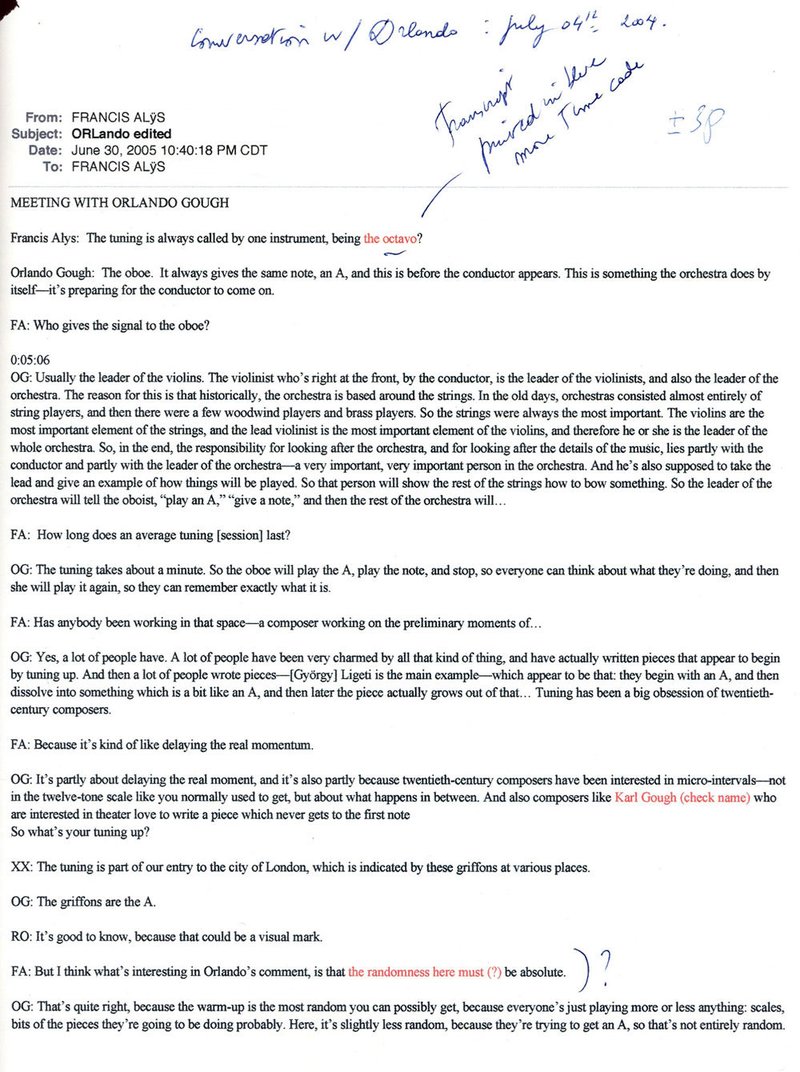
The equivalent of what you call texture, for us, would be this rumor, the idea of a growing rumor. — Francis Alÿs
In a series of transcripted conversations, Alÿs discusses the literal and metaphorical potential of sound and the rhythm in Seven Walks with British composer, Orlando Gough.
Sounds passing through circumstances, by David Toop
If I am here, then where is the sound? Sound has no sight-line, no fixed point in space, no duration beyond its own activation, no single moment of existence, no edges, but only cumulative moments of disappearance at the boundaries of its reach. Its place as a mark within temporal dimension and the mapping of space can be a mixture of the precise and ambiguous: a bell rings, the clock chimes, a cannon fires a shot. The day is divided and the space of human relations is mapped according to the fluctuations of a sound and its extension through air.
Call it spillage, cloud, smoke; the need for similes drawn from the tangible yet fluid world of liquids and dispersing materiality is only a lunge at the nature of sound. So much of the world is consumed through the culture of text, in alliance with various visual forms. Urban space is divided up according to ideas of visual drama, social connectivity, and the pragmatics of movement, yet sound is taken for granted, forgotten, or ignored despite its vital role as an element in urban design. Sound is not reducible to a text, so not susceptible to ‘reading’. Its place within the system of signs is an anomaly, the paradox of the invisible/audible. The transience of sound, its abstraction, its passage through time that leaves no trace, all form a resistant barrier to interpretation. Most attempts to understand sound attempt to avoid its nature in favour of descriptions of its context, so sound remains a barely categorised yet central element of social and cultural life.
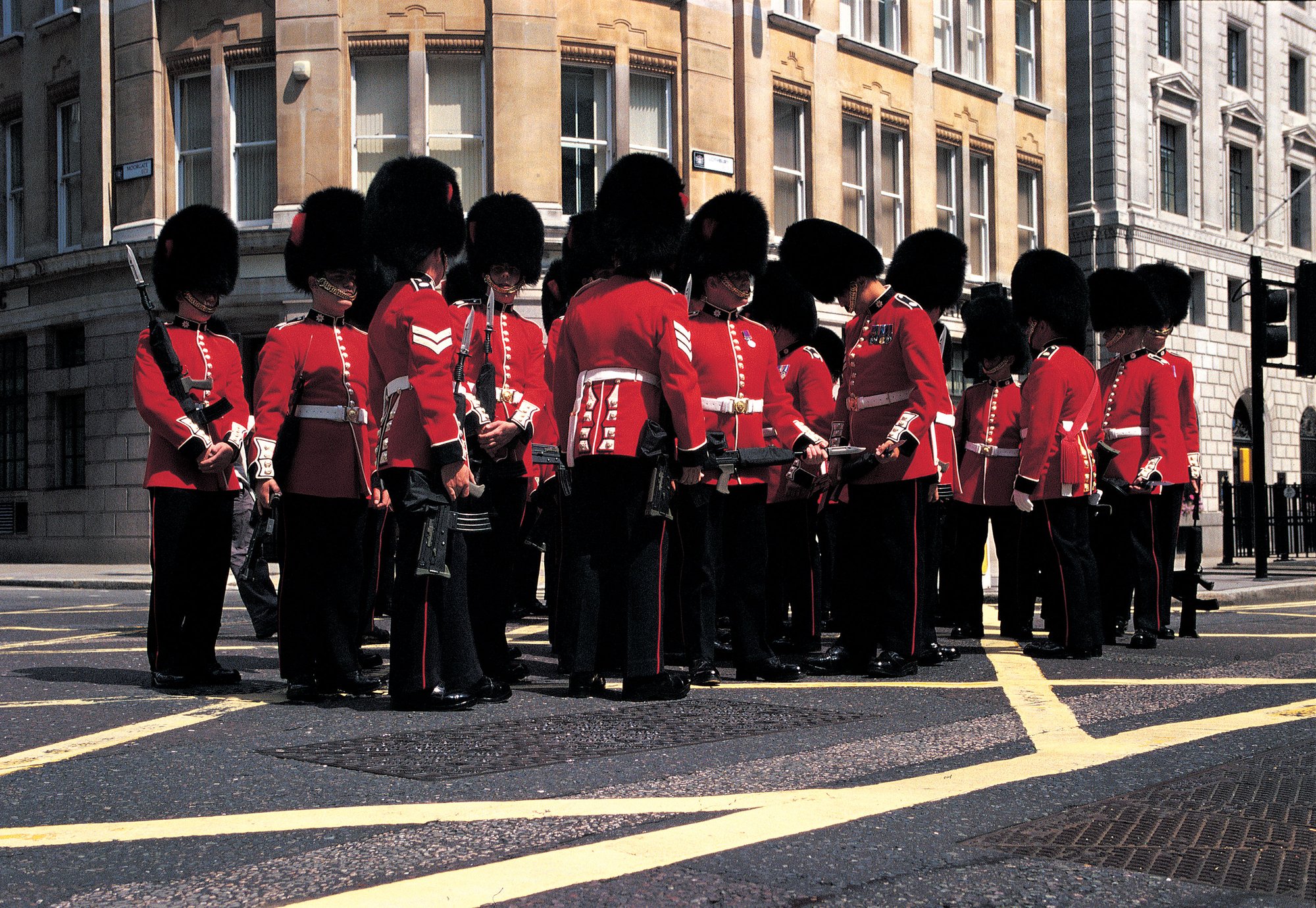
Image: (left) Guards (2005), Francis Alÿs, Seven Walks (2005)
Francis Alÿs
Born in Antwerp in 1959, Francis Alÿs initially trained as an architect. Following a period of study in Venice he decided to both leave Europe and to discontinue his work as an architect, relocating to Mexico City. Alÿs’s recent projects include Bolero (1996–2007) a short animation, accompanied by over 500 preparatory drawings, harnessing the rhythms of a humble shoeshine, and Politics of Rehearsal (2005–07), a 30-minute video that combines footage of a speech by President Truman, narration by critic Cuauhtémoc Medina, and a rehearsal for a striptease. Rehearsal parallels socio-political promises from Latin America with the tactics of a stripper – always leaving something to be desired. For his best-known work, When Faith Moves Mountains (2002), Alÿs recruited 500 volunteers at Ventanilla, outside Lima, Peru. The volunteers formed a single line at the foot of a giant sand dune; using shovels they shifted the dune by four inches. In 2004 Alÿs was the inaugural winner of the Blue Orange Prize in Berlin.
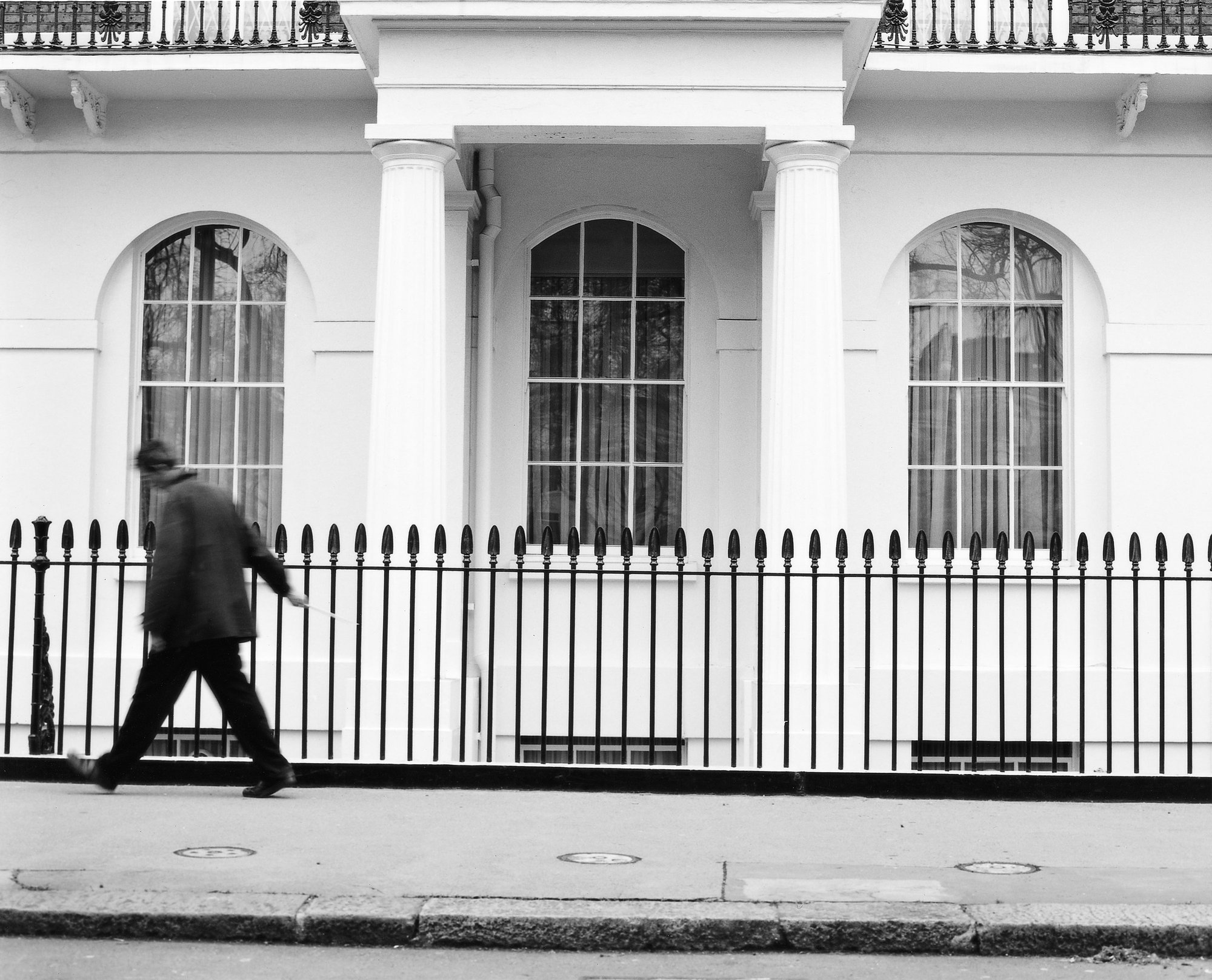
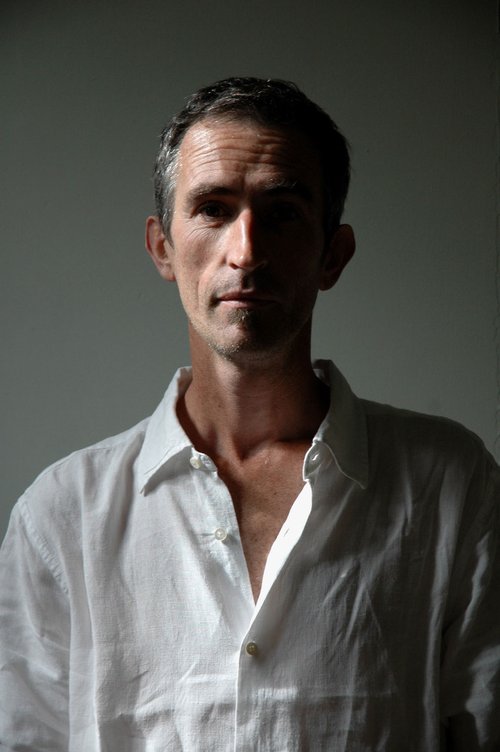
Images: (Portrait) Francis Alÿs in 2005. Photograph: Thierry Bal. (Cover) Railings (2004), Francis Alÿs, Seven Walks (2005)
A proper Coldstream Guard, complete with red coat, bearskin, mirror-polished boots and semi-automatic rifle. He's on parade. Except that he's not. He's alone. […] He sits on a bench and brushes his bearskin with the rough affection of a man for his dog. The CCTV cameras, you can tell, are worried. He shouldn’t be here. He’s carrying a serious weapon. They pan and tilt to follow him. — Hugh Pearman, The Sunday Times
… a guardsman is wandering about, slightly aimlessly. A proper Coldstream Guard, complete with red coat, bearskin, mirror-polished boots and semi-automatic rifle. He's on parade. Except that he's not. He's alone. […] You never see a lone guardsman. And never out of context, in the streets of the financial district, far from barracks or palace ceremonial duties. He holds his gun slackly by his side. His body language speaks of slight dejection. He stops and stares at the window of Next, as if pondering a switch to smart-casual clothes. He sits on a bench and brushes his bearskin with the rough affection of a man for his dog. The CCTV cameras, you can tell, are worried. He shouldn’t be here. He’s carrying a serious weapon. They pan and tilt to follow him. — Hugh Pearman, The Sunday Times, 18 September 2005
Best, though, is Guards, for which Alÿs filmed 64 uniformed Coldstream Guards. Each begins wandering the City of London alone, with instructions to fall into formation should he cross a colleague. The individuals coalesce and finally form a full square. The work wittily connects the wealth of the City with Britain's imperial past, its memory preserved in the uniform of the guards. — Nick Hackworth, Evening Standard, 29 September 2005
This month sees another nocturnal encounter between art and nature with Francis Alÿs' film of a lone fox roaming the rooms of the National Portrait Gallery (NPG), as captured on the NPG's CCTV cameras. However, The Art Newspaper can exclusively reveal that the star of The Nightwatch is no lowly specimen of wild urban fauna unleashed in the capital's halls of culture in the name of art, but an extremely handsome six-year old professional fox, Bandit by name, who has already appeared in numerous TV programmes including ITV's popular drama series Peak Practice and Midsomer Murders and commercials for Lloyd's bank. — Louisa Buck, The Art Newspaper, October 2005
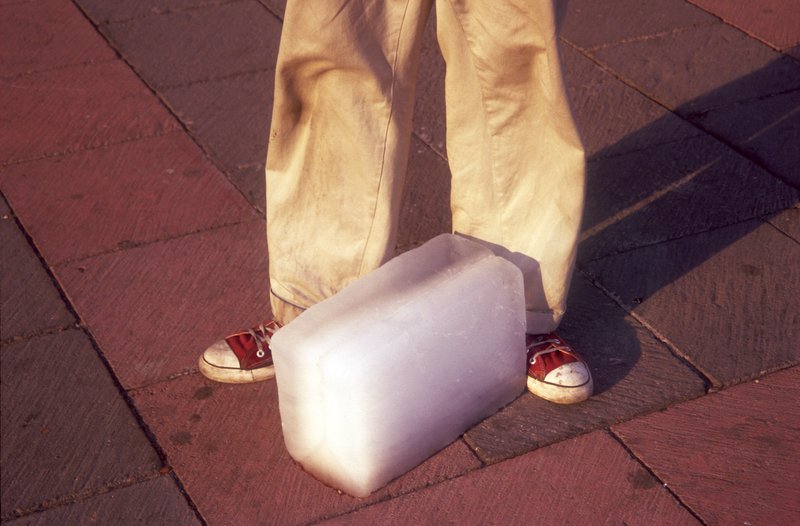
The places in his photographs are significant not sculpturally but socially. They are boundaries between public and private - whether the private enterprise of selling ice-chilled refreshments, or lives behind closed doors. Although these images are pictures of cities, they are also portraits of the cities' humanity. — Gabriel Coxhead, The Financial Times, 4 October 2005
In 1996 Francis Alÿs took a photograph of himself in Mexico City, the place where he has been based for the last 15 years. The image, titled Turista, shows the artist standing in line with two other men, his back against the railings of Zócalo, the city's main square. Alÿs, like the men on his left and right, has a sign by his feet. But while the others list technical professions ('Electrsita', 'Plomero (en general) Gas', 'Pintor y Yesero'), his reads 'Turista'. Alÿs not only looks substantially different from the men standing by him (much taller, with lighter skin, sunglasses and European clothing...), he also has something completely different to offer: no particular skills, just those of a tourist, of a detached, fleeting observer. […] For his current exhibition at 21 Portman Square and the National Portrait Gallery in London, Alÿs has adopted the tourist role again... — Pablo Lafuente, Art Monthly, November 2005
Credits
Seven Walks was supported by Bloomberg.
The production and presentation of individual walks have been made possible through the generous support of anonymous Angels, The Outset Contemporary Art Fund (Guards), The Felix Trust for Art (Railings) and The Moose Foundation for the Arts and Mary Moore (The Nightwatch).
With thanks to The Portman Estate and Godfrey Vaughan for making available 21 Portman Square and The Elephant Trust for supporting the initial research and development of the project. Thanks also to the Lisson Gallery and the National Portrait Gallery.
Seven Walks, the publication, was supported by The Henry Moore Foundation and the Robbins Foundation. This project was supported by Arts Council England, Artangel International Circle, Special Angels, Guardian Angels and The Company of Angels.