In The Artangel Collection
The trilogy of films premiered at the Polish Pavilion at the 54th International Art Exhibition in Venice, which was the first time that a non-national had represented Poland at the Biennale. The three single screen films traverse a landscape scarred by the histories of competing nationalisms and militarisms, overflowing with the narratives of the Israeli settlement movement, Zionist dreams, anti-Semitism, the Holocaust and the Palestinian right of return.
Register your interest
Fill out the form to find out more about how you can borrow and present this work, including tech specs, use cases, and more.
Audio: The Artangel Podcast 6: With One Religion We Cannot Listen
The Artangel Podcast and recordings from the symposium: And Will Europe Be Stunned?
Audio: The Artangel Podcast 6: With One Religion We Cannot Listen
Layered with sounds, speeches and dialogue from the films, this sixth edition of The Artangel Podcast collates thoughts about the project from the following speakers, many of whom attended the Jewish Renaissance Movement in Poland's first congress in Berlin:
Yael Bartana, the artist behind And Europe Will Be Stunned
- Jakub Czupryński, a guide, genealogist and researcher tracing Jewish roots in Poland
- Galit Eilat, a writer, curator and research curator at the Van Abbemuseum in Eindhoven
- Gil Hochberg, an associate professor of Comparative Literature at UCLA
- Yosefa Loshitzky, Professor of Film, Media and Cultural Studies at the University of East London
- Daniel Meir, sound designer of the film trilogy
- Zoran Terzic, teacher in political aesthetics at Humboldt University
- Michał Zadara, Polish theatre director, set designer and multimedia artist
- Dana Yahalomi, co-founder of Public Movement. Performed as Dana Sierakowski in And Europe Will Be Stunned.
Listen on Soundcloud.
Symposium: And Will Europe be Stunned?
This symposium, at Whitechapel Art Gallery on Friday 18 May 2012, opened up the debates sparked by the films. It began with a keynote paper from Gil Hochberg, Professor of Comparative Literature at UCLA. This was followed by a Q&A with the artist and a panel discussion with Joanna Mytkowska, Director of the Museum of Modern Art in Warsaw, and Jacqueline Rose, Professor at Queen Mary University.
This event was organised with the support of the Polish Cultural Institute.
Panel discussion with Yael Bartana Joanna Mytkowska, Gil Hochberg and Jacqueline Rose
Listen on Soundcloud.
Yael Bartana in conversation with Slawomir Sierakowski
A conversation between the artist and Slawomir Sierakowski, the protagonist of her trilogy and a Polish political figure in his own right. Moderated by Andrew Nairne, Director, Kettle's Yard University of Cambridge.
Listen on Soundcloud.
Introductory comments and keynote paper from Gil Hochberg
Listen on Soundcloud.
Yael Bartana in conversation with Achim Borchardt-Hume
Listen on Soundcloud.
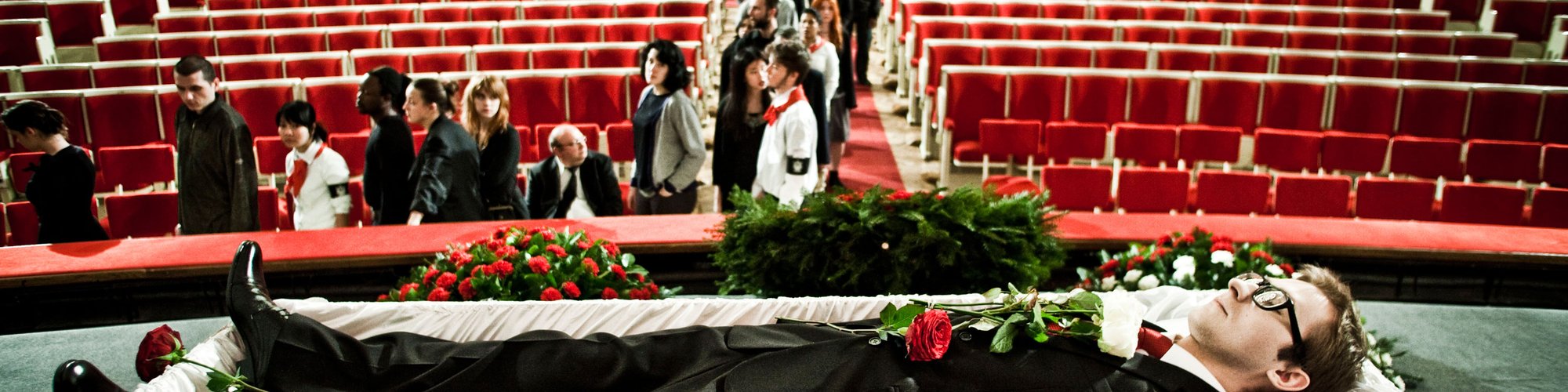
Image: Production still from Zamach (Assassination), part of the trilogy And Europe Will be Stunned by Yael Bartana (2011). Photograph: Marcin Kalinski
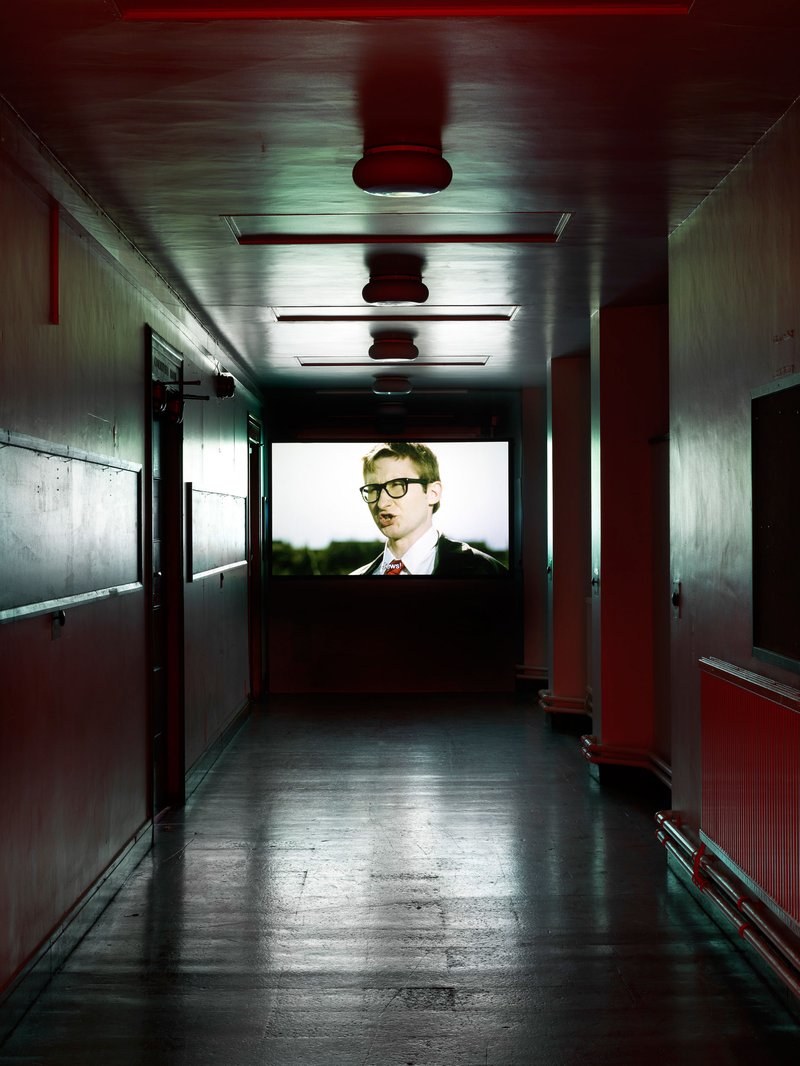
Mary Koszmary (Nightmares), 2007
A young activist, played by Sławomir Sierakowski (founder and chief editor of Krytyka Polityczna magazine), delivers a speech in the abandoned National Stadium in Warsaw. He urges three million Jews to come back to Poland. Yael Bartana: ‘This is a very universal story; as in previous works, I have treated Israel as a sort of a social laboratory, always looking at it from the outside. These are mechanisms and situations which can be observed anywhere in the world. My recent works are not just stories about two nations — Poles and Jews. This is a universal presentation of the impossibility of living together.’
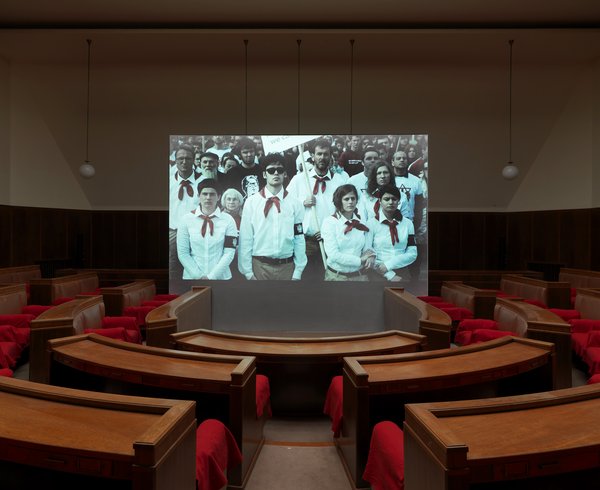
Image: installation shot of And Europe Will Be Stunned at Hornsey Town Hal, photograph: Marcus Leith.
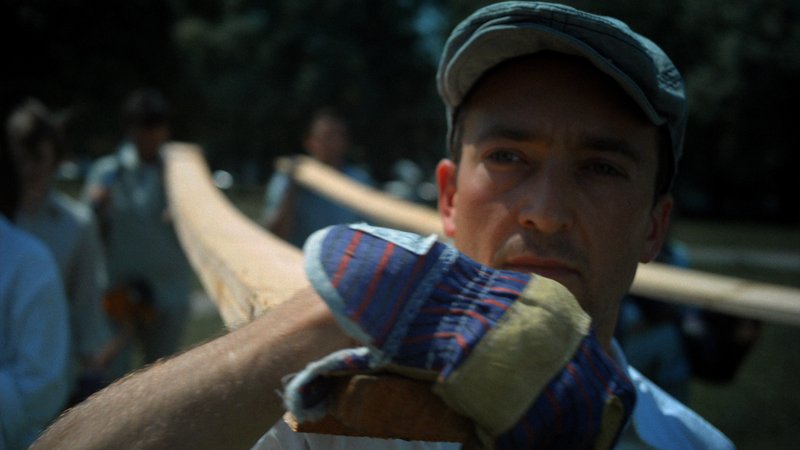
Mur i Vieża (Wall and Tower), 2009
The second film in the trilogy Mur i wieża (Wall and Tower) was made in the Warsaw district of Muranów, where a new kibbutz was erected at actual scale and in the architectural style of the 1930’s. This kibbutz, constructed in the centre of Warsaw, was an utterly ‘exotic’ structure, even despite its perverse reflection of the history of the location, which had been the Jewish residential area before the war, and then a part of Warsaw Ghetto. The film invokes previous heroic images of strong and beautiful men and women who mythically established Israel. Bartana: ‘I quote the past, the time of Socialist utopia, youthfulness and optimism — when there was a project of constructing a modernist idea of a new world.’
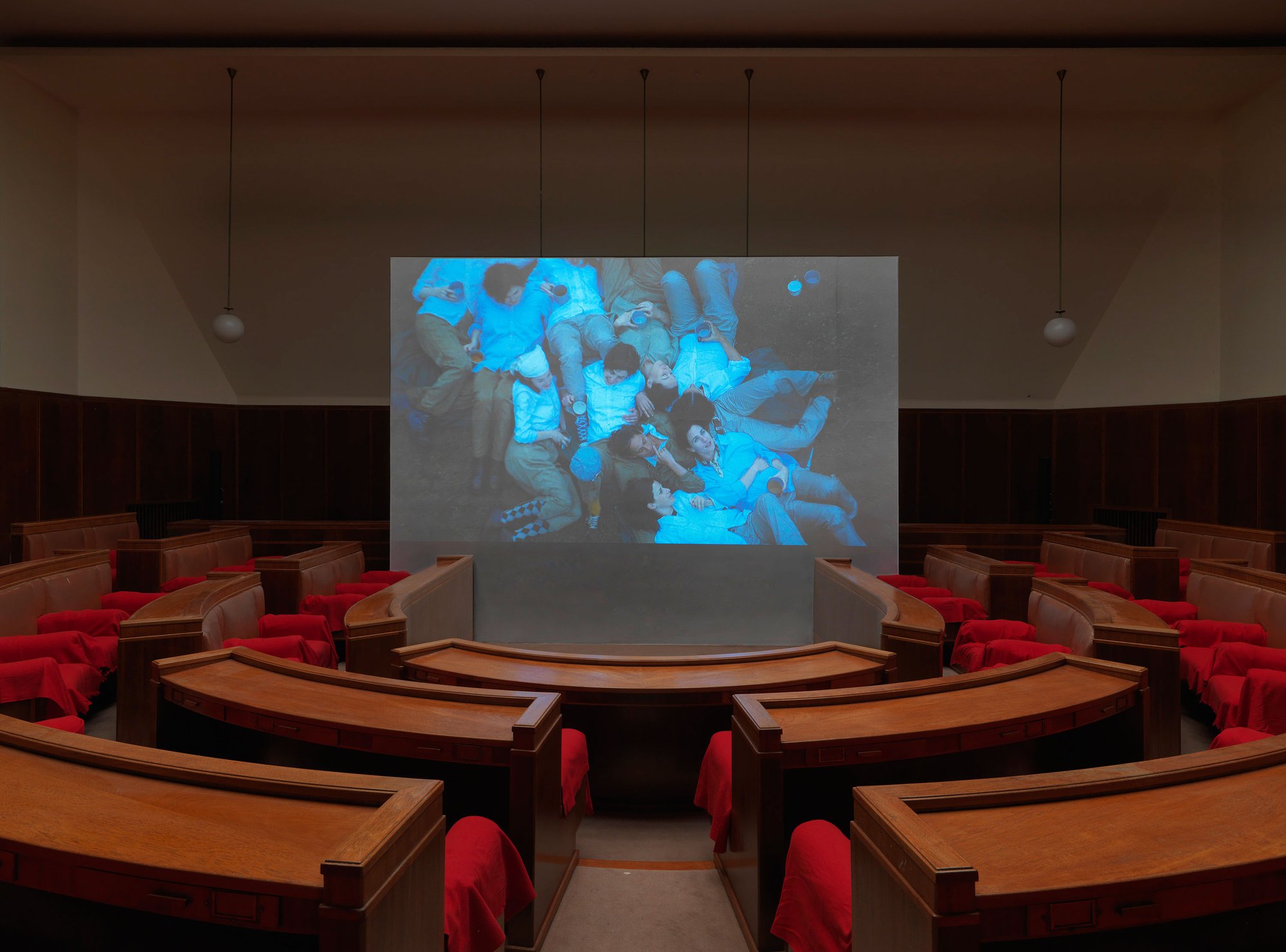
The Return of the Stranger
By Joanna Mytkowska, 2012
When Yael Bartana first came to Poland, the country was embarking upon a national debate about the memory of the Holocaust. The very idea that there was a need to revisit this wartime past was deeply contentious. Jan T Gross's Neighbours (2000), which recounted the story of the inhabitants of the small village of Jedwabne who burnt their Jewish neighbours alive during a pogrom in 1941, forced readers to face the traumatic revelation that Poles were not always the victims or heroes of the resistance; frequently they were witnesses or even collaborators in the crimes of the Holocaust. [1] For the first time since the war, a discussion about guilt — individual and collective — was initiated. Painful and heated, the argument stirred up old demons, awakening suppressed memories that opened up old wounds and began to hammer away at the walls of national denial.
Bartana came to Poland with her experience of struggling with life in Israel, where she objects to the state’s discriminatory policies against Palestinians. She brought an understanding of the consequences of such policies, which lead to inevitable double standards — the differential treatment of those who are ‘one of us’ as opposed to those who are ‘one of them’ — thus undermining the essence of democracy. She had already created Profile (2000), a work in which she showed a young woman performing military drills; Trembling Time (2002), her take on the moment of silence for Independence Day in Israel; as well as Wild Seeds (2005), in which she tried to process the experience of removing settlers from the West Bank. In Poland, she decided to tackle the strained Polish-Jewish relations, nascent antisemitism and the roots of the Israeli state, whose founders were largely of Polish descent. The burden of both the Polish and the Israeli trauma was so great that the verdict of history seemed irreversible. The whole subject matter threatened to be either too monumental or too pompous and, therefore, banal. It seemed to be dead and closed, offering nothing but the potential for compulsive repetition. But illumination came — when Bartana decided to delve into the trauma, to take it on and accept it to a certain degree, believing that in time she would be able to achieve a level of freedom that would enable her to imagine alternative scenarios.
The experience of And Europe Will Be Stunned is reminiscent of the therapeutic process, and, like a dream interpreted, the work gradually reveals layers of latent meaning. The complex narrative evokes conflicting associations, ideas and desires that are not easily resolved; it is a study in exposure, revealing the symptoms of a trauma that has not yet been worked through. The trilogy succeeds in creating the atmosphere of an oppressive nightmare through constant reference to familiar matters narrated through a discredited propagandist language which is subversively twisted and distorted.
Read other essays:
History is a Nightmare by Jacqueline Rose
Answering a Call by Boris Groys
This is Not a Call to the Dead by Ariella Azoulay and Adi Ophi
Image: installation shot of And Europe Will Be Stunned at Hornsey Town Hall, photograph: Marcus Leith.
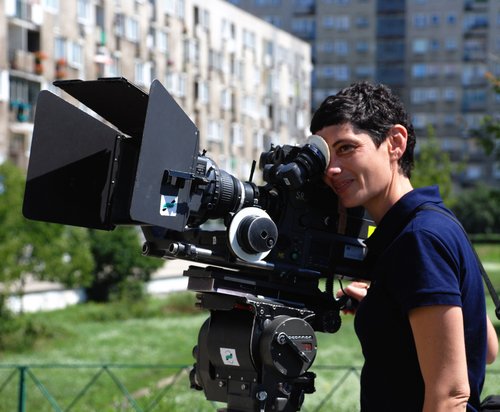
Yael Bartana
Yael Bartana’s films, installations and photographs explore the imagery of identity and the politics of memory. Her starting point is the national consciousness propagated by her native country Israel. Central to the work are meanings implied by terms like “homeland”, “return” and “belonging”. Bartana investigates these through the ceremonies, public rituals and social diversions that are intended to reaffirm the collective identity of the nation state. In her Israeli projects, Bartana dealt with the impact of war, military rituals and a sense of threat on every-day life.
Between 2006 and 2011, the artist has been working in Poland, creating the trilogy 'And Europe Will Be Stunned', a project on the history of Polish-Jewish relations and its influence on the contemporary Polish identity.
Yael Bartana represented Poland for the 54th International Art Exhibition in Venice (2011).
Her project 'True Finn – Tosi suomalainen', dealing with national identity operating as a means of inclusion and exclusion, was presented at the IHME Festival 2014 in Finland.
Bartana's films swim between fact and fiction. They move seamlessly from one genre to another, from documentary to biopic to Riefenstahl. The performances are remarkable, especially that of the leader Slawomir Sierakowski. — Laura Cumming, The Guardian, 13 May 2012.
“Zamach (Assassination)” occurs after the assassination of the young leader in the first video: an enormous bust of him worthy of Lenin is dedicated in a city square as hundreds of demonstrators and helmeted police look on. The entire effect is exceedingly complex, with just the right mixture of staginess, uplifting music and 21st-century details to keep the artifice before us while delving into numerous issues including the failed utopia of Israel, the unresolved trauma of World War II, the danger of nationalism and, above all, the importance of diversity. — Roberta Smith, New York Times, 19 April 2013.
The films are beautifully orchestrated, richly woven and profoundly ambiguous. Is Bartana presenting a genuine ideological premise or taking a purely provocative position? It could all appear pointlessly absurd, but in involving real people, the Israeli artist lends a plausibility. — Evening Standrad, 24 May 2012.
Shot with the cool, slick, swooping camera movements of a Benetton advertisement, or maybe a celebrity tribute like the one for Michael Jackson, the tone of the first half ofZamach is that of very black humor that is occasionally in dubious taste—it’s hard not to laugh at Sierakowski lying in state, much less his ridiculous bust, which looks like it was fashioned from soap. — Daniel Baird, Candian Art, 16 February 2012.
Credits
Zamach (Assassination), part of And Europe Will Be Stunned was commissioned by Artangel, Outset Contemporary Art Fund, Louisiana Museum of Modern Art and Zachęta National Gallery of Art, in association with Annet Gelink Gallery, Artis, Australian Centre for Contemporary Art, The Netherlands Foundation for Visual Arts, Design and Architecture, Ikon Gallery, Sommer Contemporary Art Gallery, The Netherlands Film Fund. Produced by My-i Productions in association with Artangel. Zamach (Assassination) is incuded in the Artangel Collection, a national initiative to commission and present new film and video work, supported by the National Lottery through Arts Council England and the Esmée Fairbairn Foundation.
Artangel is supported by Arts Council England, Artangel International Circle, Special Angels, Guardian Angels and The Company of Angels.