Our artist development programme, Making Time, continues to provide artists with time and support to critically interrogate the materials central to their practice. Below, the second cohort share their research into materials and matter, revealing insights that emerge when we look closely at residue, process and natural cycles.
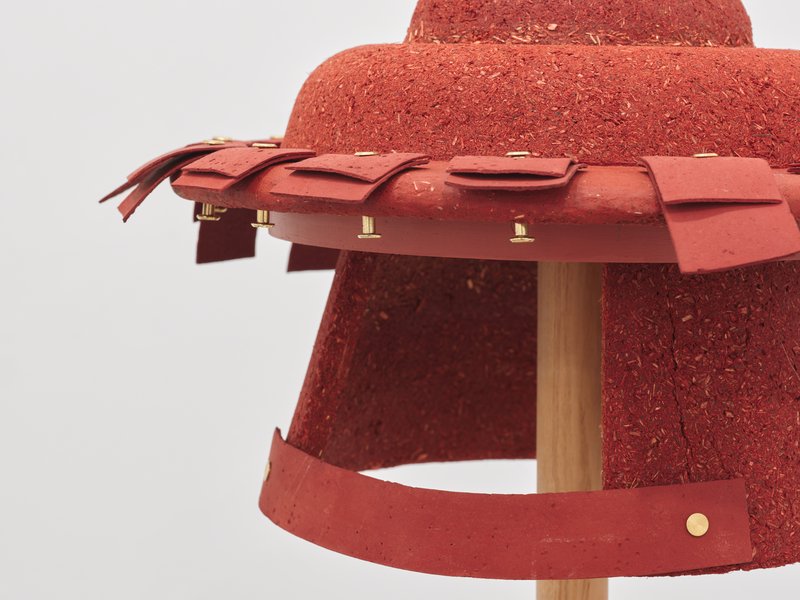
Claire has been working with an experimental 'kitchen chemistry' approach, to develop an ecologically responsive practice that does not rely on extractive methods of mass production.
"Visits to Loughborough and Kingston Universities have opened up new avenues for material enquiry and testing. In January, I will return to the Department of Materials at Loughborough University, supported by Dr Fiona Hatton, Senior Lecturer in Polymer Chemistry.
I will explore the possibilities of compression moulding, mechanical testing, optical microscopy, and scanning electron microscopy with experimental material mixes made from a range of biopolymers including potato starch and cellulose in combination with natural fibres like flax, nettle and hemp.
This testing will give me a better understanding of the characteristics of each material component and what happens when these materials are joined together further understanding their possibilities."
Image Description: Sun Shield (Version 1), 2025, 40 x 40 x 150cm. Materials: Starch, vinegar, water, rapeseed meal, flax, nettle, hemp, earth pigment, clay powder, linseed oil, wood, brass fixings, cardboard. Installation at Standpoint Gallery, London, 2025. Photography: Tim Bowditch
Attuned to environmental hormones, reproductive justice, and racial biopolitics, Taey is drawn to what leaks—through bodies, across borders, and within waterways and ecosystems. Their work is often site-specific, tracing memories, contamination and restoration.
"I have continued to approach waterways as sites of interruption and leakage. Through the body, my focus has turned toward hormones as a form of internal flow shaped by exposure, regulation, and contamination. Through sites, I look closely at the waterways of Manchester and Derry, where industrial histories continue to shape how water moves, stalls, and accumulates.
I am exploring how industrial expansion reshapes the flow of water, how toxicity circulates and settles, and how contamination travels across time, infrastructure, environments, and bodies. I am drawn to moments where water is slowed, stopped, or redirected, and to what gathers there; sediment, chemicals, residues, memory.
Working within climate and ecology, I remain a forever student, asking: does knowing lead to better care? What operates behind green masking? And, what remains concealed by what we are allowed to see?"
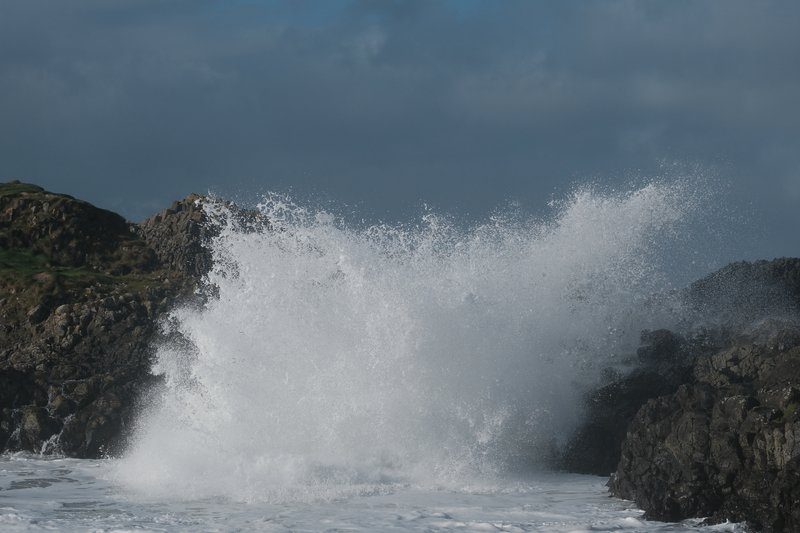
Image Description: Leaking to Surging, Derry, 2025. Courtesy of the artist Taey Iohe
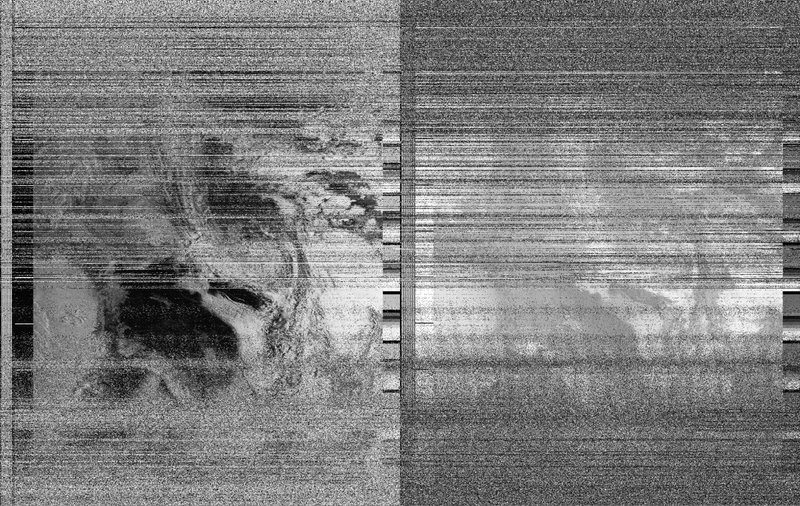
Nastassja is an artist and researcher working across sound, film, and performance. Her practice often involves long-term collaborations to explore the relationship between archeological remains and the geopolitics of land-use.
"I have been exploring radio technologies and atmospheric archaeology through practical experiments and collaborations. This research began on a residency at Artica in Svalbard, and continues now through the Making Time programme.
Despite prominent descriptions of Svalbard as exceptional and remote, I am more interested in exploring the history of the region as subject to processes of territorialisation and extraction.
One way I have observed this is in the ruins of communication infrastructures, once used to assert sovereignty and control. Meanwhile, the atmosphere of this Arctic archipelago has carried, through the radio spectrum, satellite transmissions, earth monitoring, weather data, military signals and static.
In an attempt to comprehend the tangible and spectral artefacts of ‘radio’ between the UK and Svalbard, I have been making radio listening devices and radio image transmitters as tools for fieldwork."
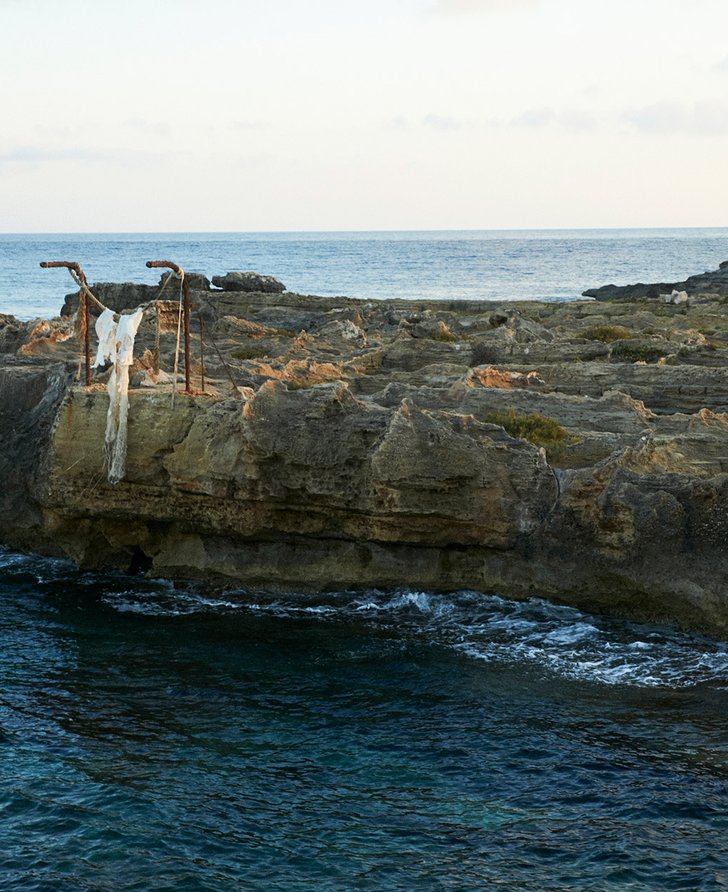
Image description: Local Date 19 August 2025 / Local Time 10:45 / NOAA15
Courtesy of the artist Nastassja Simensky
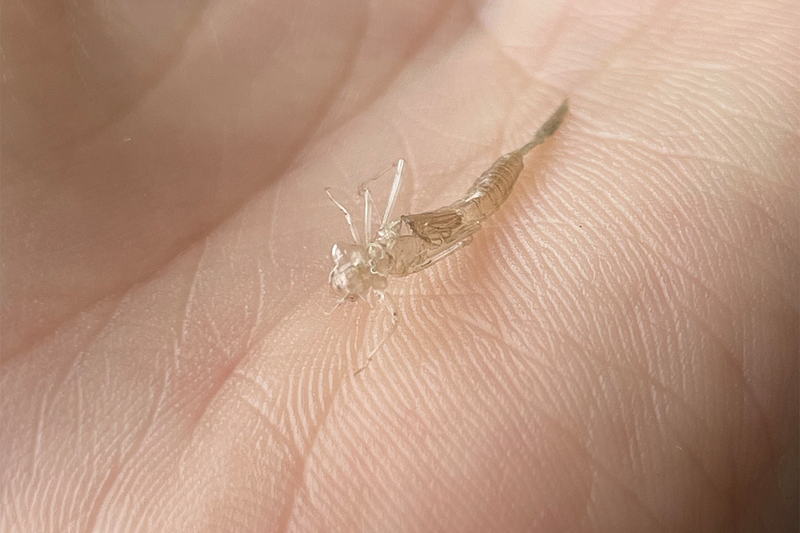
In 2023, while staying in an island forest in Sweden, Sophie J Williamson (Undead Matter) was bitten by a tick. Now living with chronic Lyme Disease and guided by the tick as teacher, Sophie’s life and practice has been changed irrevocably, as she navigates the unexpected outcomes of disability, forced rest and unproductivity.
"My interdisciplinary practice, Undead Matter, has seen seismic – unexpected – transformation during the Making Time residency. My low physical and cognitive capacity has forced me to completely rethink ways of approaching research and how I define my practice.
Over months of stasis, I witnessed inner and outer lifecycles unfold from my sofa; my own IVF-fertilised eggs died away over days under a time-lapse microscope, while I watched stow-away damselflies hatch and mature to adulthood in my aquarium, and a newly dug garden pond spring to life of its own accord. These parallel temporalities—human, more-than-human, technological—unsettled my previous distinctions between activity and inactivity, success and failure.
Rather than asking how to resume production, I now ask how creative practice might be measured when value is no longer equated with acceleration, visibility, or continuous output. Where, and how, can bodies that have fallen out of sync with speed-driven systems reclaim temporal sovereignty? To stop — because one must — becomes to stop the world, even briefly, from claiming me as fuel."
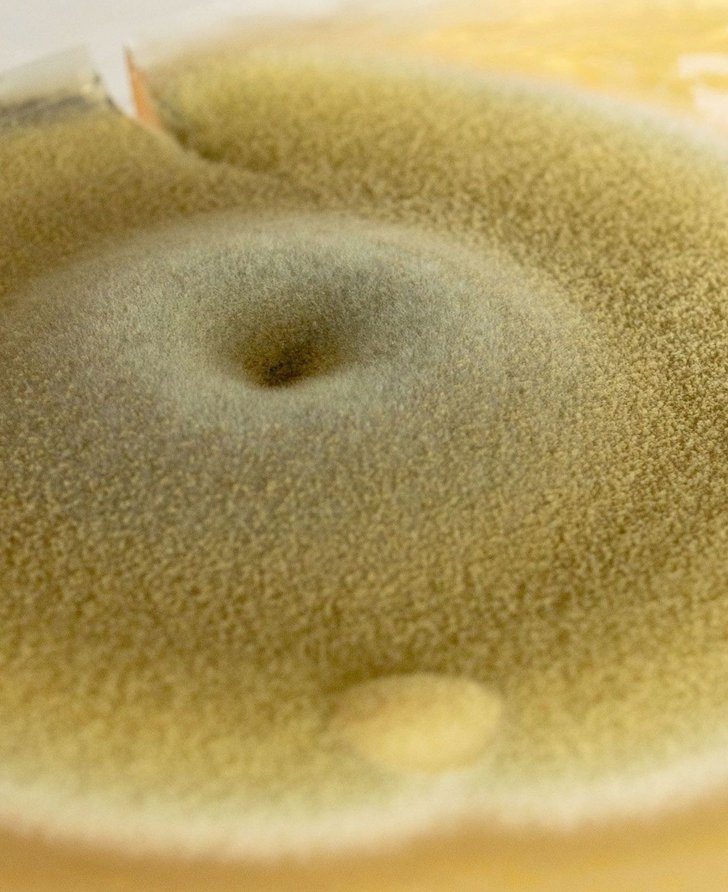
Film still from Gemma Anderson-Tempini, And She Built a Crooked House, 2023. By Tilly Shiner. Courtesy of the artist Sophie J Williamson (Undead Matter)