
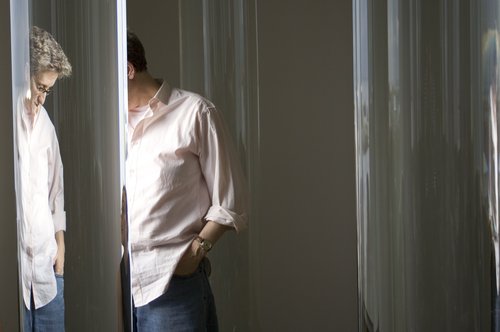
Artist Roni Horn first collaborated with Artangel on Library of Water, a permanent work on the south-west coast of Iceland, a country she had been making regular visits to since the mid-70s. Returning to water as well as to Artangel, she contributed a piece on London's River Thames for the Hearts of Darkness series as part of A Room for London in 2012 and then to Inside in 2016.
Since her first visit to Iceland after college, Roni Horn’s artistic practice has been deeply nourished by her experiences on the island – both solitary and communal ones. This relationship has engendered an extended series of books and exhibitions based on photographs made in Iceland. Amongst these books, which have the generic title To Place, are photographic series based on folds for sheep (Folds), swimming pools and hot pots (Pooling Waters), rivers and waterfalls (Verne’s Journey), and the face of a young Icelandic woman. All of the books, as the title suggests, share a precise sense of Iceland’s distinctiveness, its special sense of place.
Over recent years, Horn’s involvement with Iceland has deepened further. She has contributed an extended series of writings published in the daily broadsheet, Morgenbladid, which reflect on pressing issues for Iceland’s present and future. More recently, she has donated and installed Some Thames, 80 photographs of the surface of the River Thames, to the University of Akureyri. Prior to conceiving her most ambitious work in Iceland, Library of Water in 2007, Horn created many projects and artworks specific to country, including You Are The Weather (1995), Pi (1998), Some Thames (2000), Her, Her, Her And Her (2003) and Doubt By Water (2004).
Water runs through the body of Horn’s work. It is present in her photographs of clouds, rivers, and the sea; in her writings and recordings about the properties, histories, and associations of water; and in her glass sculptures which are – like water – sometimes completely transparent, sometimes entirely opaque. Flowing, reflective, and unfixed, water is the medium through which Horn generates her poetic meditation on the elusive nature of identity.